
FairSheets Strategies
How Das Family Office classifies, evaluates and recommends funds.
The FairHorizon framework
Every fund in our universe is assigned to one of six FairHorizon buckets, colour-coded for shorthand. The horizon describes investment time-horizon, not risk appetite per se — though the two are correlated. We use it because a client's horizon is the single most actionable input to portfolio construction. See the full FairHorizons reference for all six profiles and the asset classes within each.
Three successful strategies
We advocate three investment strategies that we can confidently assume are highly likely to lead to success over the long term. They are not in competition with each other — a well-built portfolio can combine all three.
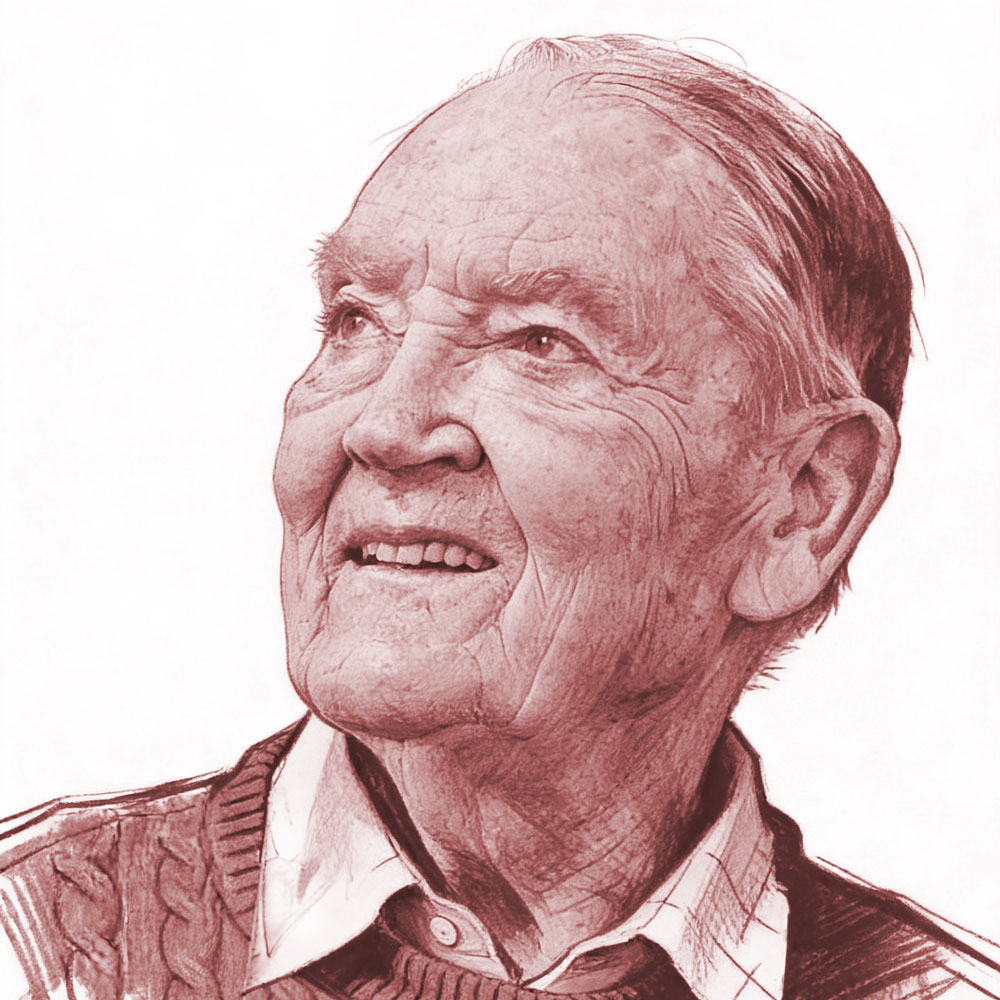
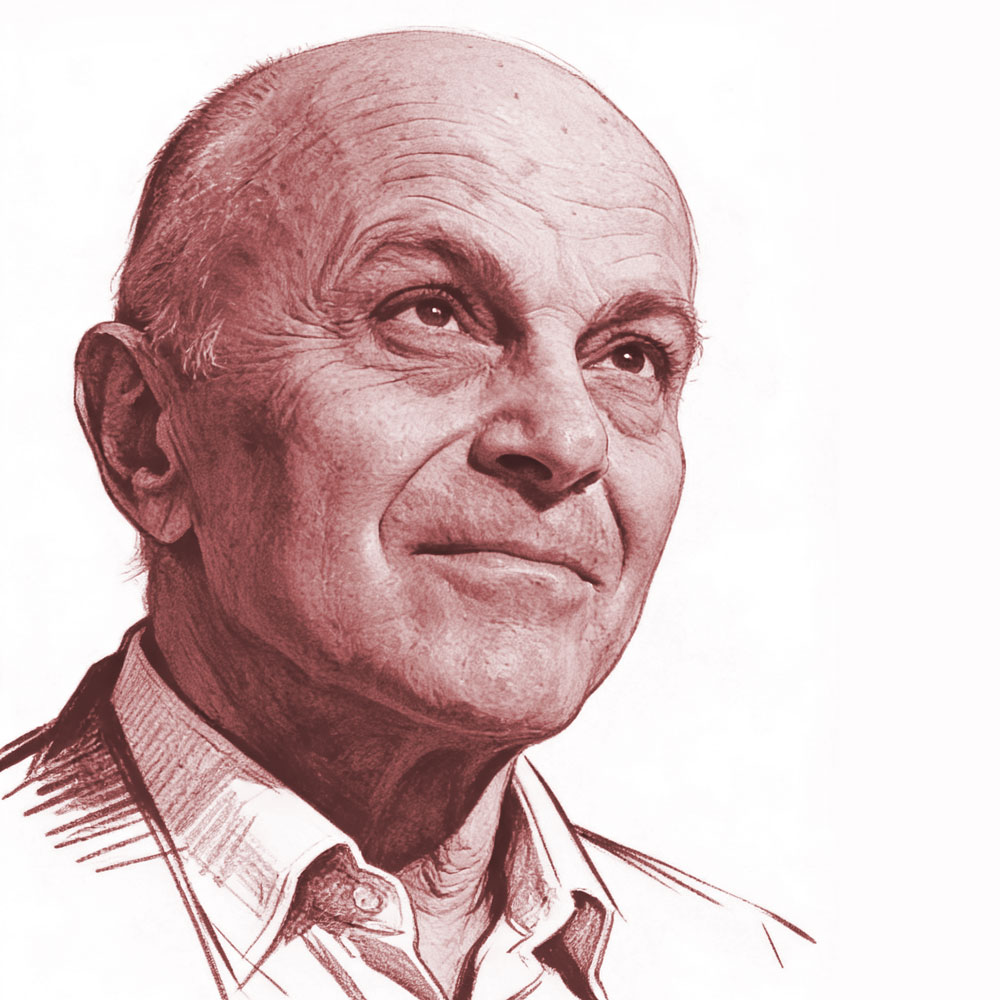
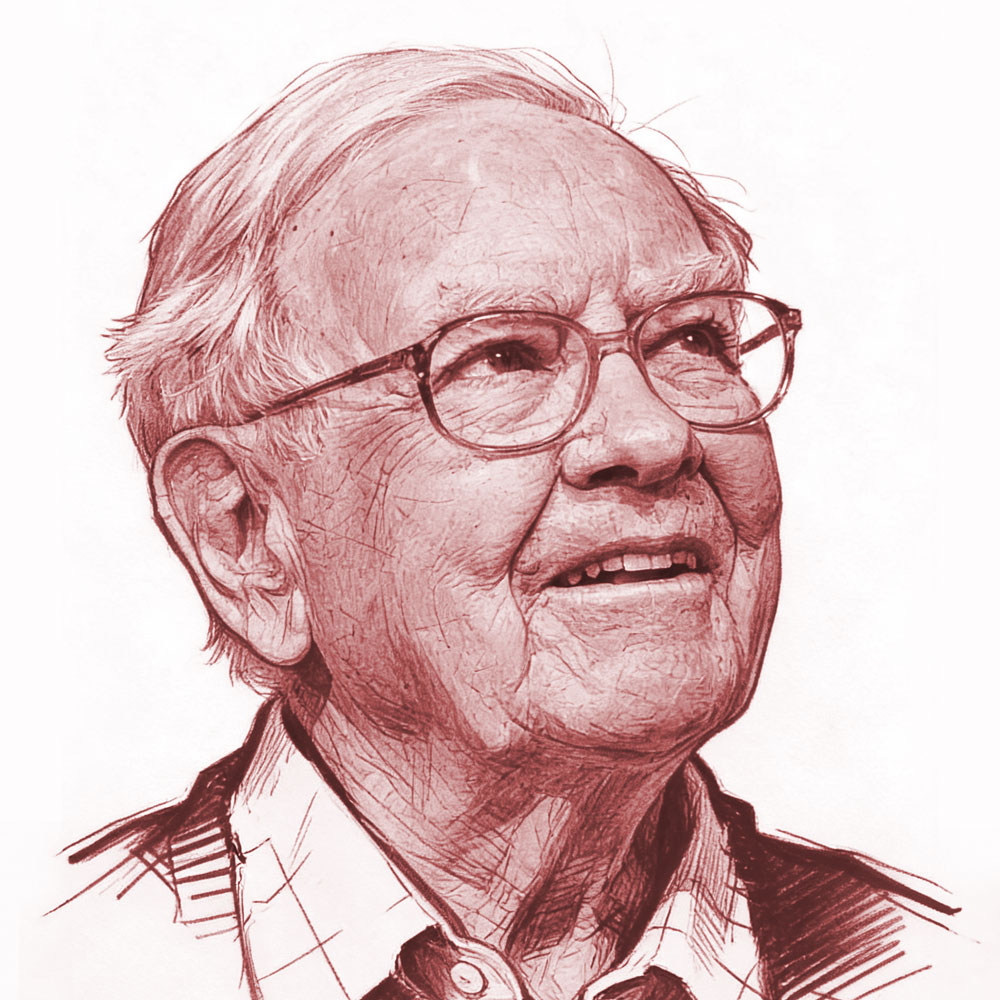
All three approaches have worked over multi-decade horizons, and all three remain worth holding. Most investors arrive at a blend. The charts below show how each strategy has performed in our own investment universe.
Jack Bogle
The index approach
Vanguard Global Bond Index blended with the SPDR MSCI ACWI ETF at six safety / return ratios.
| Absolute return (9.8 yrs) | Annualised return p.a. | ||
|---|---|---|---|
| 100% Vanguard Global Bond Index | 18.20% | 1.72% | |
| 80% Vanguard Bond / 20% SPDR MSCI ACWI | 54.91% | 4.55% | |
| 60% Vanguard Bond / 40% SPDR MSCI ACWI | 93.05% | 6.92% | |
| 40% Vanguard Bond / 60% SPDR MSCI ACWI | 132.71% | 8.97% | |
| 20% Vanguard Bond / 80% SPDR MSCI ACWI | 173.97% | 10.79% | |
| 100% SPDR MSCI ACWI ETF | 216.93% | 12.45% |
Eugène Fama
The factor approach
The six Dimensional World Allocation portfolios, one per FairHorizon — a systematic tilt toward value, size, and profitability.
| Absolute return (7.7 yrs) | Annualised return p.a. | ||
|---|---|---|---|
| P1 — Dimensional Global Ultra Short Fixed Income | 22.71% | 2.71% | |
| P2 — Dimensional World Allocation 20/80 | 33.60% | 3.85% | |
| P3 — Dimensional World Allocation 40/60 | 51.50% | 5.57% | |
| P4 — Dimensional World Allocation 60/40 | 70.00% | 7.17% | |
| P5 — Dimensional World Allocation 80/20 | 87.54% | 8.55% | |
| P6 — Dimensional World Equity Fund | 112.05% | 10.31% |
Warren Buffett
The quality approach
Vanguard Global Bond Index blended with the iShares Edge MSCI World Quality Factor ETF at six safety / return ratios.
| Absolute return (9.8 yrs) | Annualised return p.a. | ||
|---|---|---|---|
| 100% Vanguard Global Bond Index | 18.20% | 1.72% | |
| 80% Vanguard Bond / 20% iShares Quality Factor | 49.00% | 4.14% | |
| 60% Vanguard Bond / 40% iShares Quality Factor | 83.06% | 6.34% | |
| 40% Vanguard Bond / 60% iShares Quality Factor | 120.90% | 8.39% | |
| 20% Vanguard Bond / 80% iShares Quality Factor | 163.21% | 10.34% | |
| 100% iShares Edge MSCI World Quality Factor ETF | 210.81% | 12.23% |
How a fund is classified
- Map the underlying exposures. Each fund's current and stated exposures (asset class, sectors, geography, duration if applicable) are extracted from its prospectus and recent fact-sheets.
- Score the expected return and volatility band. We model a forward-looking range using long-term capital-market assumptions plus the fund's specific risk premia.
- Match to a FairHorizon. The fund is placed in the bucket whose expected-return and volatility band best encompasses the modelled range.
- Liquidity and operational checks. Funds must offer at least monthly liquidity to be considered. UCITS structures are preferred for cross-border tax efficiency.
- Cost screen. TER is compared to credible peers in the same asset class. Funds with substantively higher TER need to justify it with manager skill, structural alpha, or unique exposure.
How we read valuations
The rental-yield analogy
Imagine you are an investor considering buying an apartment to rent out. You want to determine which property offers the best rental yield relative to its purchase price. The rental yield functions similarly to the earnings yield in stocks: it indicates how much rental income you receive annually compared to the purchase price.
Bonds: capital preservation through inflation-beating yields
For bonds, it is crucial that their yield exceeds the current inflation rate. If a bond's interest rate falls below inflation, the investor experiences a real loss in purchasing power. For example, if a bond provides a 3% annual yield in an environment with 4% inflation, the investor incurs a real loss of 1%.
Stocks: attractive investments require at least a 6% earnings yield
Compared to bonds, stocks carry higher risks but also promise higher long-term returns. The key rule is that a stock's expected earnings yield should be at least 6%, as anything below this threshold suggests an overvalued investment. This 6% benchmark is based on historical data showing that stock markets have generated long-term average returns between 6% and 8% per year.
For longer-term investment horizons (FairHorizons Yellow through Red), we always communicate a minimum target return of 6% p.a. or a projected long-term return of between 6% and 8% p.a. This corresponds to price-to-earnings ratios (P/E ratios) of between 14 and 17.
What each FairSheet contains
Every fund page shows:
- About the fund — manager, strategy, holdings count, structural notes.
- Key facts — ISIN, management style, asset class, TER, distribution policy, inception, share class, recommended portfolio allocation cap.
- Performance chart — fund vs asset-class benchmark vs FairHorizon benchmark, since the fund's inception (not arbitrary cut-offs).
- FairHorizon context — visual time-horizon band placement.
- Annualised returns — 3y / 5y / 10y, plus 5y standard deviation.
- Why we prefer this fund — editorial reasoning across Relevance of Strategy, Manager Expertise, Differentiated Portfolio, and Performance.
- Historical maximum drawdown — peak-to-trough loss + recovery period, rebased to 100 at the peak.
- Diversification donuts — credit rating (bonds / multi-asset) or top-10 holdings (pure equity), plus sectors and geography.
- FAQ — auto-generated answers to common questions.
Asset-class and FairHorizon benchmarks
Each fund is paired with two reference points: an asset-class benchmark (a credible like-for-like fund in the same asset class and currency) and the FairHorizon benchmark (our flagship reference fund for that horizon). Where currency coverage is incomplete, the FairHorizon benchmark falls back to USD or EUR — the relative performance comparison remains valid.
When a fund is the FairHorizon benchmark for its bucket (the Dimensional Portfolio 1 through 6 series, and ARERO), both benchmark columns are hidden — comparing a benchmark to itself is noise.
Data and refresh cadence
Numerical data for every FairSheet — historical total return, drawdown, sector and geography breakdowns, top holdings — is sourced from leading institutional financial data providers and refreshed manually on a quarterly cadence, with more frequent refreshes for funds in active client portfolios. Credit-rating breakdowns are collapsed into the Moody's standard quality buckets (Aaa, Aa, A, Baa, Ba, B, Caa, Ca, C, Others).
The visible "Last updated" date on each FairSheet reflects the most recent refresh, not the page render time. Editorial content is reviewed and updated on its own cadence; our reflections capture our forward-looking views.
What FairSheets is not
- Not investment advice. Nothing here constitutes a personal recommendation. Investing in any specific fund requires consideration of your overall portfolio, tax position, and personal circumstances.
- Not a complete universe. We cover ~149 funds we have actively researched. There are tens of thousands of funds globally.
- Not paid promotion. Das Family Office does not accept retrocessions, placement fees, or commissions from any fund manager listed.
See our full disclaimer for regulatory and legal details.